
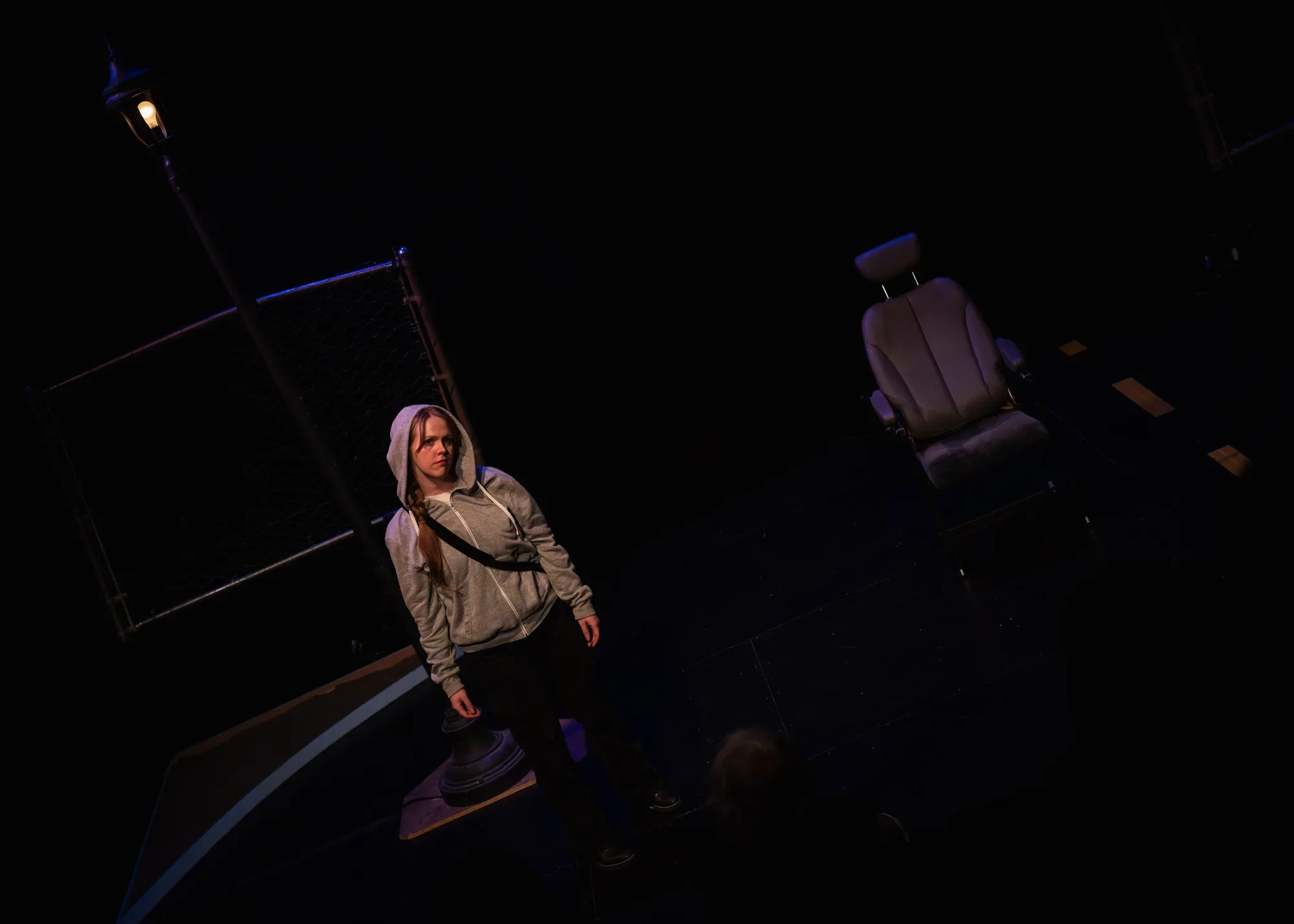
I had never been to a one-person play before and I walked into the Vancity Culture Lab matinee unsure it would be my thing. I shoot concerts. I am used to a full stage and a wall of sound to disappear behind and See Bob Run offered neither. One performer. One chair. A room small enough that there was nowhere for either of us to look away.
Daniel MacIvor wrote the play as his debut nearly forty years ago and this staging comes from Navrasa Theatre Arts and The Village Theatre Company. On paper the premise is simple. Bob is on the road, hitchhiking away from a past she keeps circling back toward, climbing from one car to the next and handing each driver a different version of herself.
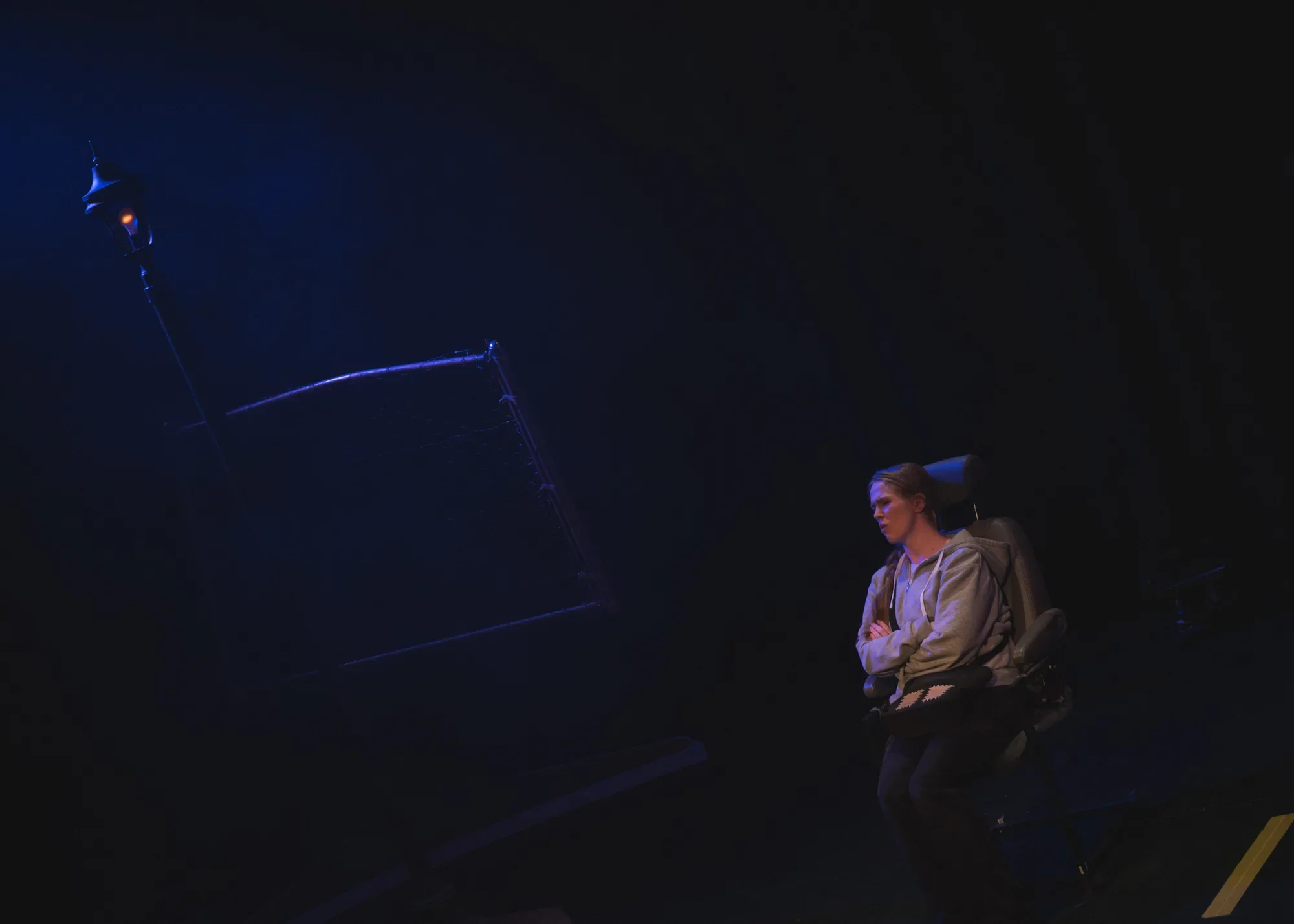
Taylor Turmel Montalbetti carried all of it. In a space that intimate her presence still had to cover the whole room and it did, sliding from a flat, solid stillness to full-throated screaming without ever losing the thread. The emotion ran high and specific and the strange part is how populated that empty stage felt. When she spoke to a driver, I could hear the driver answer. She held the weight of a cast on her own and at some point I stopped noticing that no one else ever walked on.
This is a play that keeps you working. It rarely tells you outright what it means. Instead it lets pieces slip out at different moments, to different people, so the drivers only ever get a fragment and the audience is the only one left holding the whole picture. The foreshadowing is precise. It plays on what you expect, then lands exactly where it meant to all along. I spent the hour assembling the story in real time and I was still turning it over on the walk out.
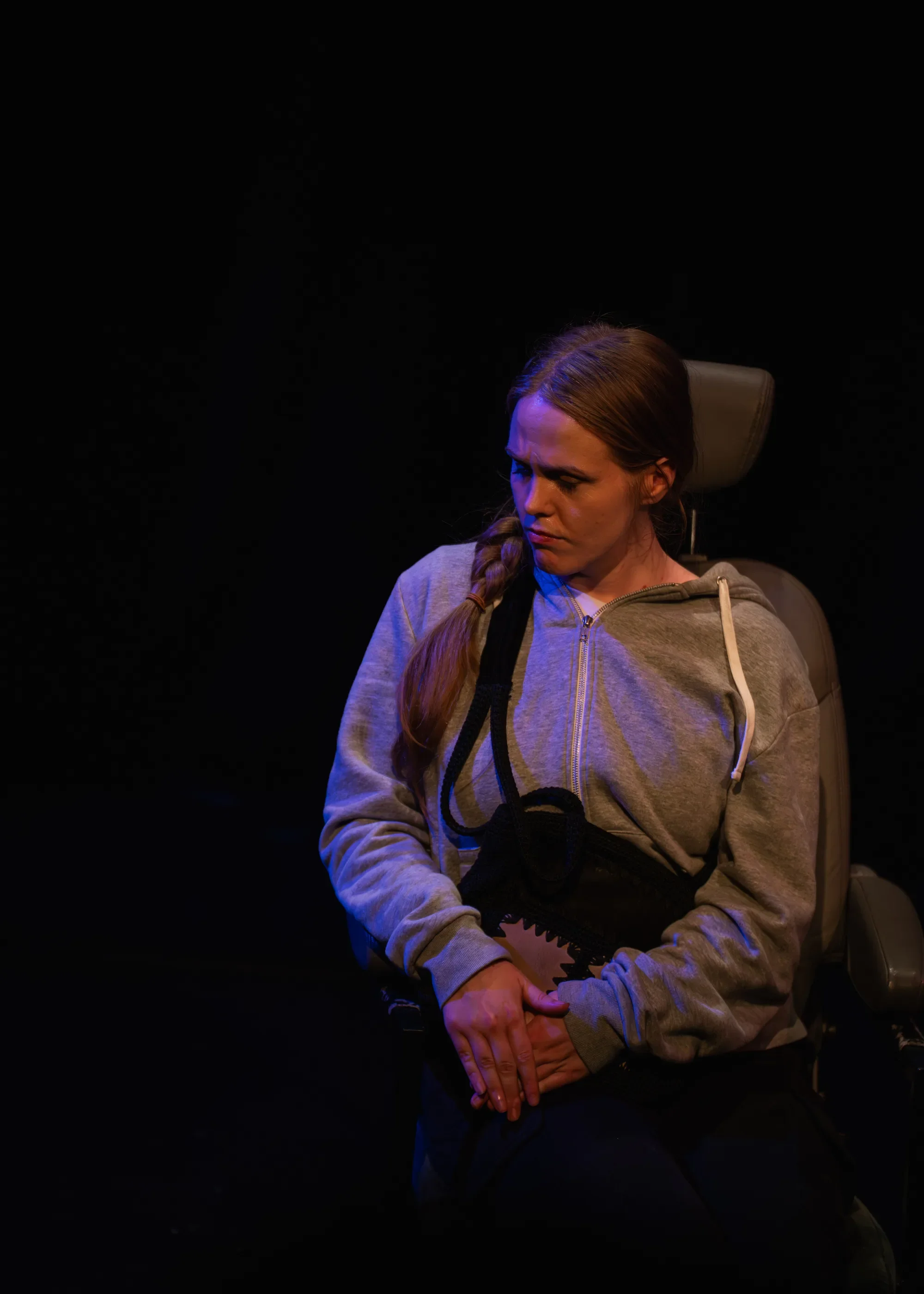
The hardest stretch for me was a ride where the driver keeps reaching for her after she has said no. Out of context it could have meant several things. But by then I had been piecing the scattered stories together alongside her and the dread arrived before the scene fully declared itself. That is what made it land. The play had taught me how to read it and then it used that against me. It was the strongest scene of the night.
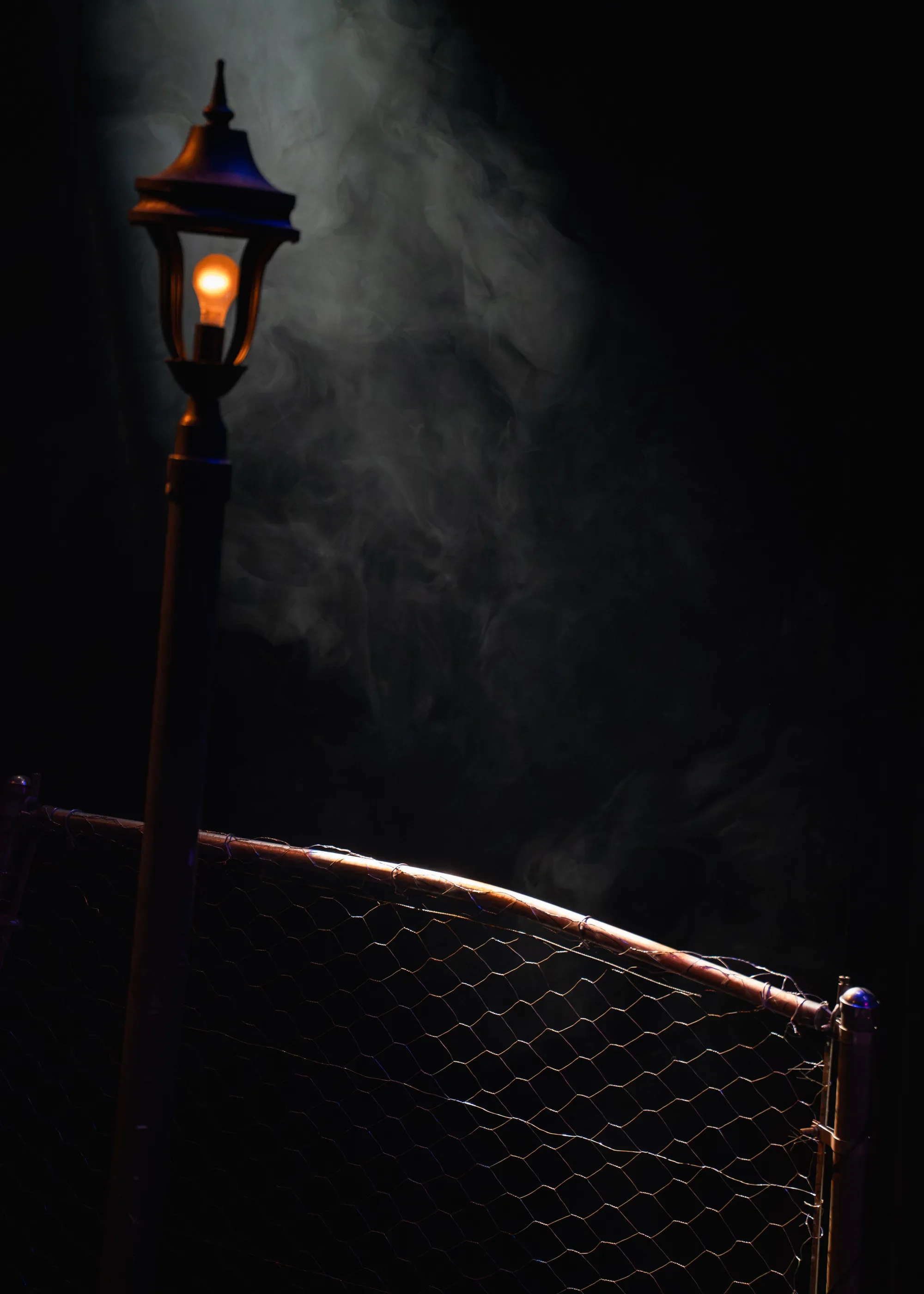
The room did much of the work. The Culture Lab's high ceilings let the tall props, a pivotal lamp post chief among them, vanish into the dark, so the space could feel cavernous and isolating one moment and close again the next, depending entirely on where the light fell. The car was mostly just the chair at center stage and it never overstayed its usefulness. When the lights dropped, a low fog crept across the floor and the sound of passing cars filled the cold around her. The single street lamp looked haunting in the haze, the light seeming to leak out of it and reach further across the stage than it should have. The lighting carried feeling on its own, sliding from sorrow to anger without a word.
The opening set the terms early. The chair stood in for a woman being hurt while the talking over love and hate as neighboring emotions. It was a shocking way to begin and it was executed cleanly enough that I trusted the production from there on.
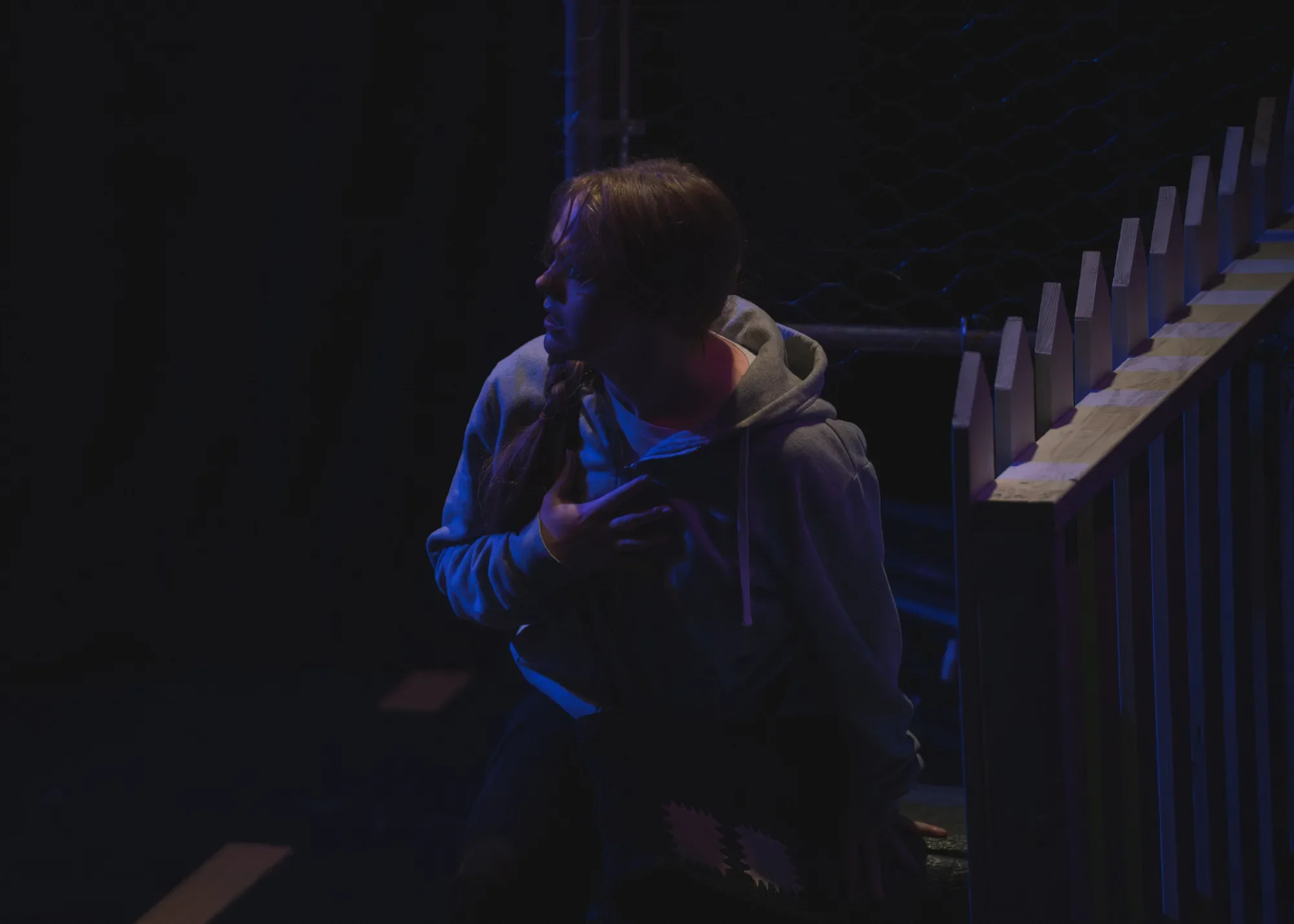
The matinee crowd was small, the way matinees tend to be, but they were with it. People stayed quiet for most of the hour, laughed at the few jokes the script allows and shifted between relaxed and on edge as the material asked them to. With subject matter this dark, the quiet read as attention rather than distance.
I came in to take photographs. I kept forgetting to. More than once I caught myself with the camera down, lost somewhere in the story, realizing I had let another moment go by.